Before the device, check the fit.
How Braun, Ulike, and Nood manuals set skin-tone, hair-color, and body-area limits, why their charts do not translate, and what to check before buying.
Three brands, three different skin-tone rulers
Before comparing contact cooling, cap counts, or bundle prices, check whether the manual for the exact handset rules out your skin tone, natural hair color, or target body area. Home intense pulsed light (IPL) relies on contrast between melanin in the hair shaft and melanin in surrounding skin, so deep skin tones and low-pigment hair hit strict boundaries long before convenience features matter.
Online discussions and roundup pages often compress suitability into a single Fitzpatrick rule or trade makeup foundation shades as a shortcut. Across the North America manuals checked on November 12, 2026 for Braun, Ulike, and Nood, the charts do not share one scale, and two manuals print conflicting statements near the dark-skin cutoff. This guide summarizes those published manuals for buying context; it cannot classify your skin or replace medical advice.
Swipe the table to compare across columns.
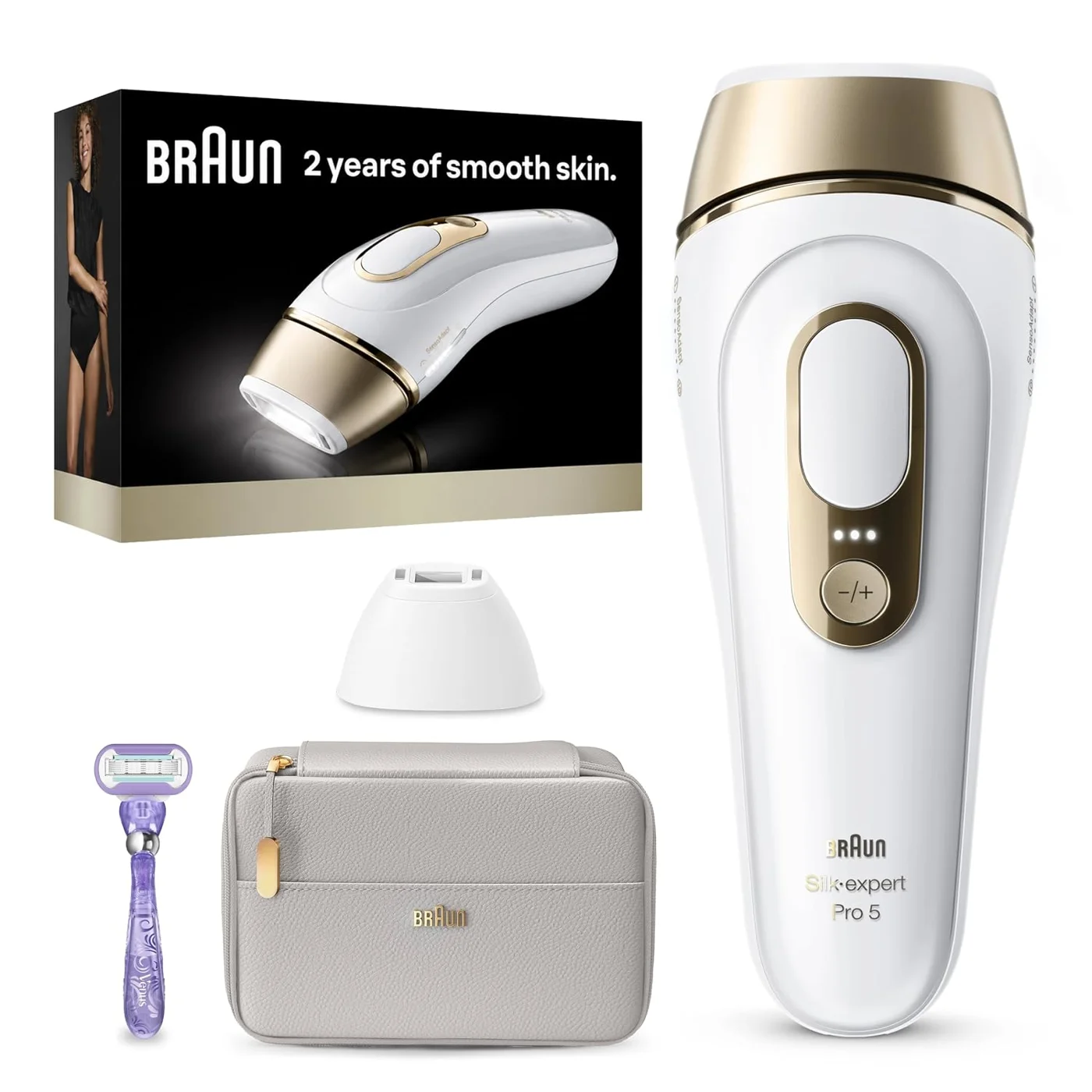
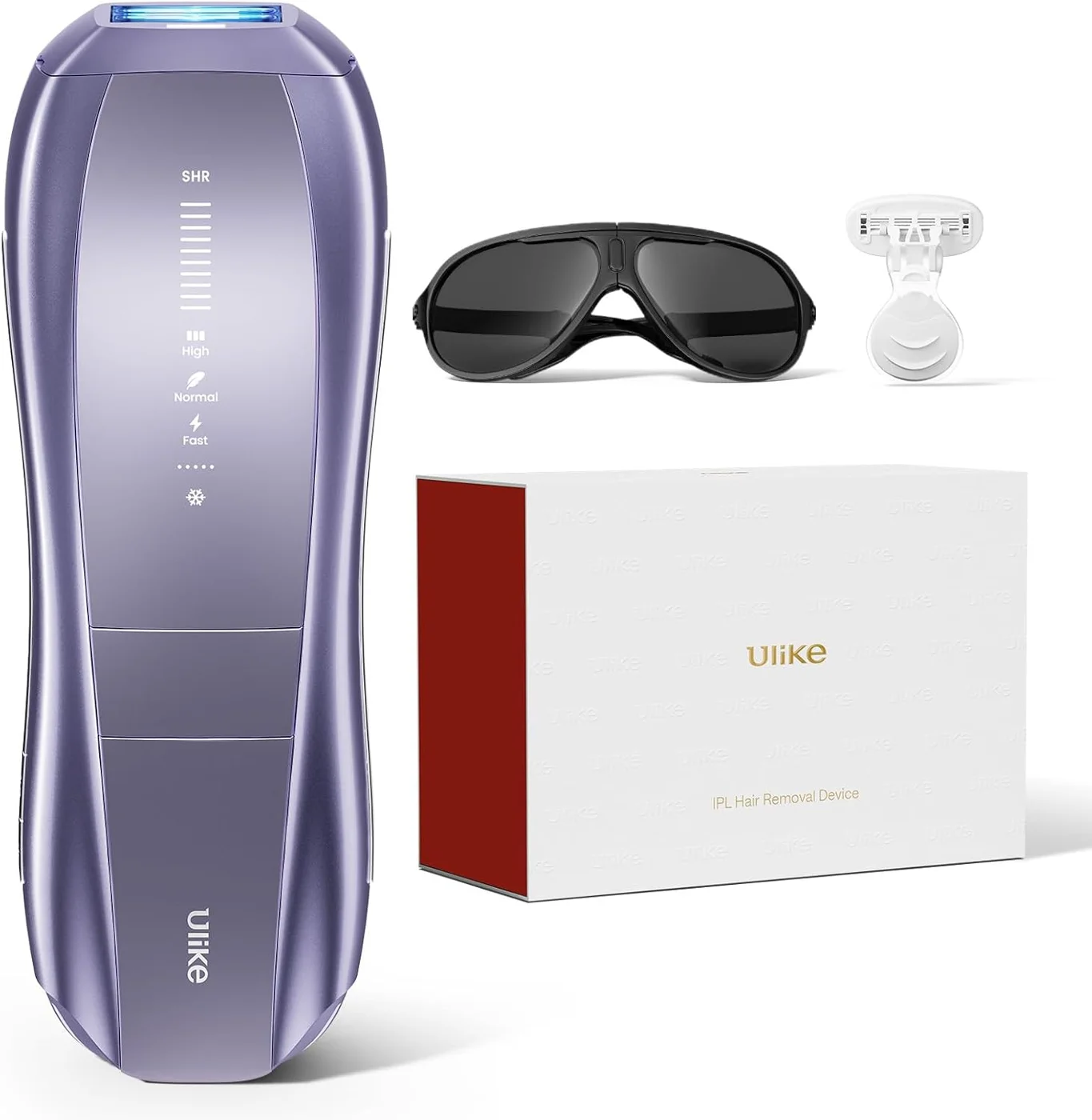
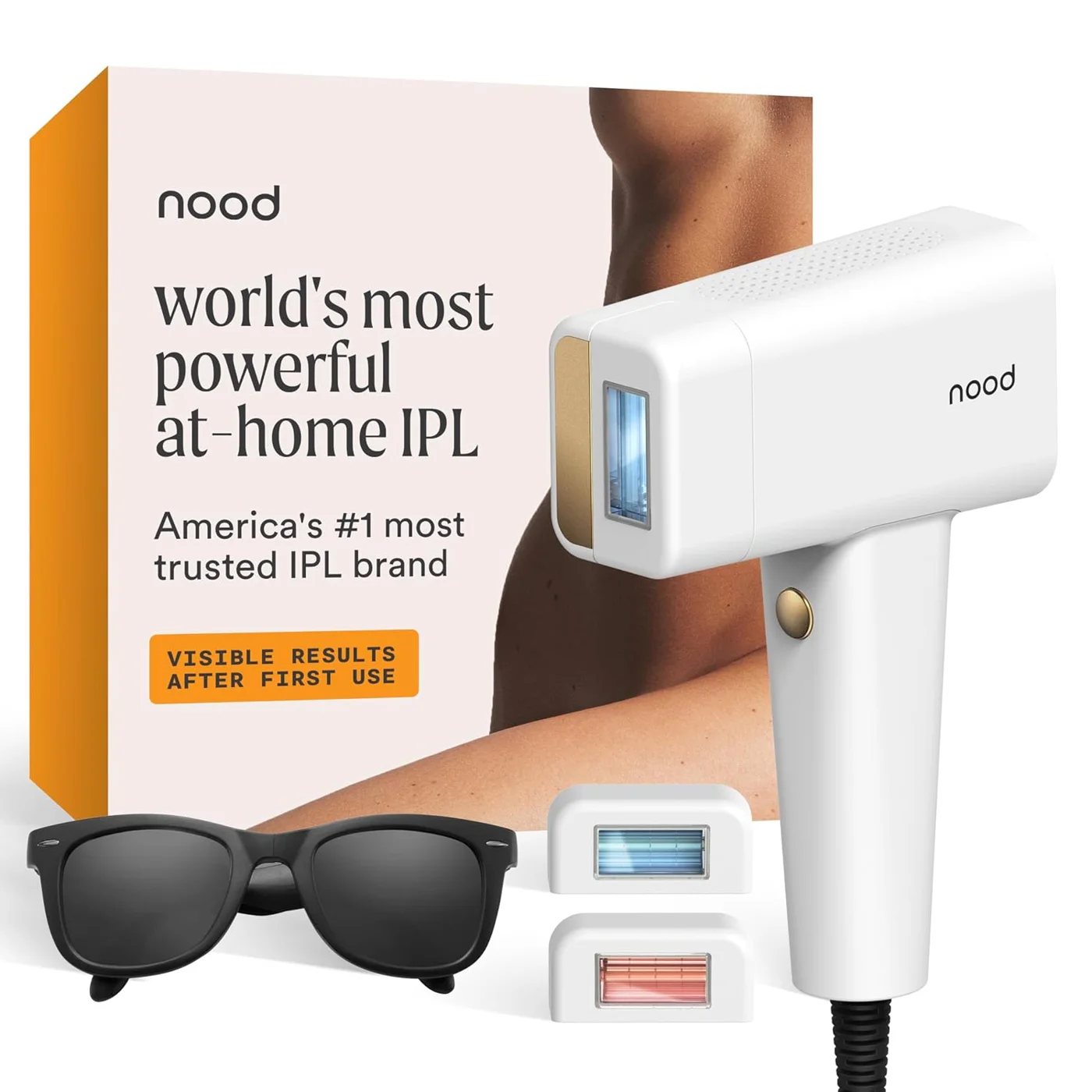
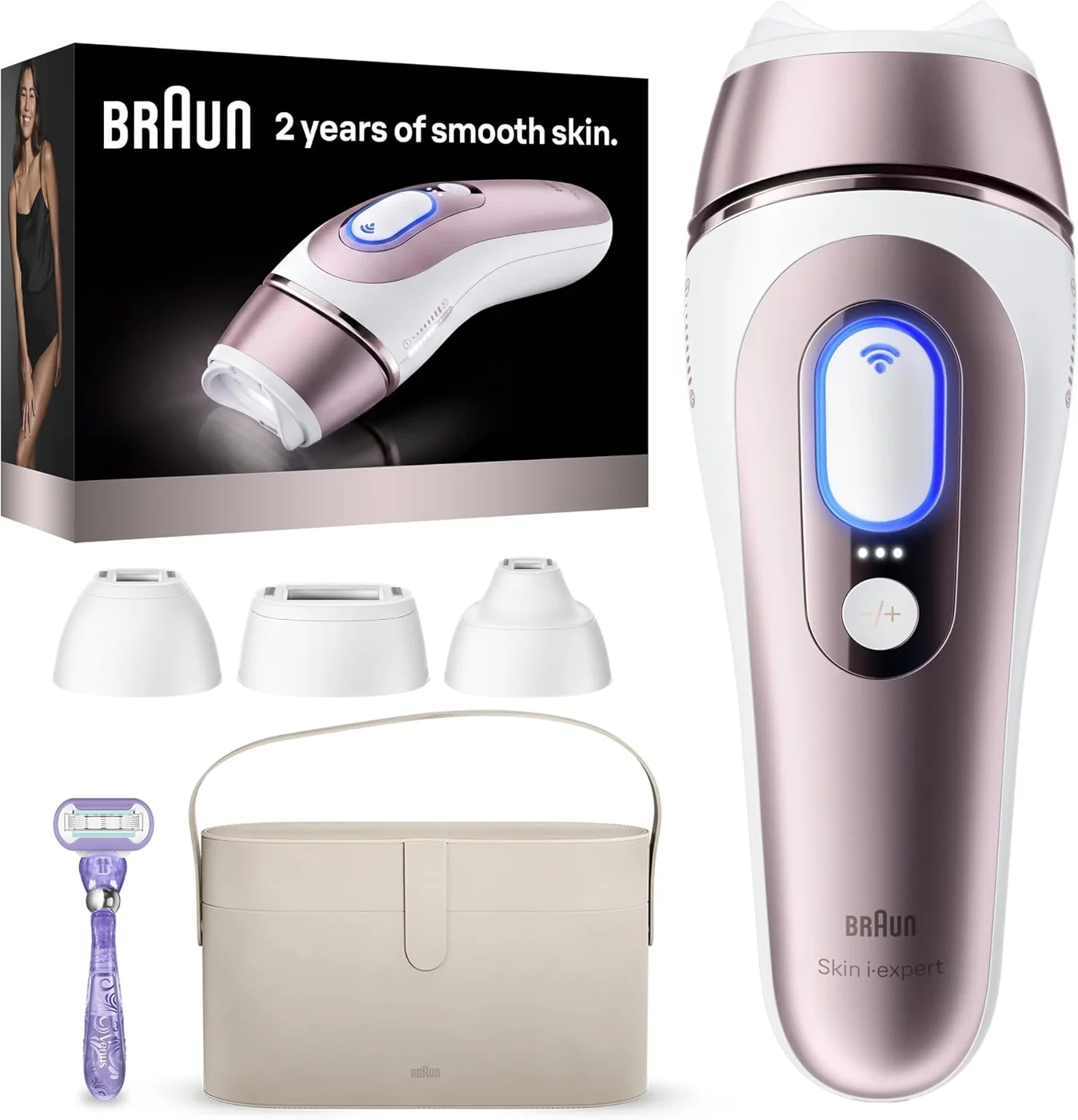
| Manual rule | Braun Pro 5 (6031) & Skin i-expert (6036) | Ulike Air 10 (UI20) | Nood Flasher Pro (T16A) |
|---|---|---|---|
| Published skin scale | Numbered tones I to VI; footnote states they do not relate to the Fitzpatrick scale | Labeled Fitzpatrick Skin Types I to VI | Labeled Fitzpatrick Skin Types I to VI |
| Dark-skin boundary | Tone VI marked unsuitable; SensoAdapt sensors show red and block flashes if skin reads too dark | Every hair row marked X under Type VI (despite a sentence above the chart naming Types I to VI); Type V carries caution | Indications list Types I to V, while contraindications exclude some Type V and all Type VI skin |
| Hair colors excluded | Light blonde, red, and white or grey marked unsuitable or ineffective; intended for naturally black or brown hair | Light blonde, red, and white or grey marked X across all skin types | Requires contrast between hair and skin melanin; low-pigment hair is not targeted |
| Face and beard limits | Women: below cheekbones only (avoid eyes, forehead, lips, nostrils). Men: shoulders and below; no face, neck, scalp, or beard | Never around eyes, eyebrows, or eyelashes; upper lip listed as a small-area example | Never around eyes; examples include face below the chin after area patch testing |
| Bikini and intimate limits | Pro 5 allows women's bikini area and bars genitals. Skin i-expert bars mucosa, labia minora, vagina, anus, nipples, penile shaft, and scrotum | Bikini line noted for SHR; bars genitals, testicles, and nipples | Bars darker-pigment skin often found on the areola, anus, and genitals |
| Age and life-stage limits | Excludes under 18, pregnancy, and lactation | Excludes under 18, pregnancy, lactation, and menstruation | Excludes pregnancy, trying to conceive, nursing, tanned skin, and photosensitivity |
Light blonde, red, grey, and white hair stay excluded
Both Braun and Ulike print explicit exclusions across white, grey, red, and light blonde hair rows, and Braun specifies that its handsets are intended for naturally black or brown hair. Because IPL heats the follicle through pigment in the hair shaft, raising the intensity level, firing repeated SHR pulses, or picking a handset with sapphire cooling does not move an excluded hair color onto the chart.
Hair pigment also varies across the body on the same person. Check the natural color of the hair growing in the exact area you plan to shave and treat rather than judging from scalp hair or darker-looking roots.
Why Type V and Type VI require reading the exact manual page
Shoppers with medium-deep or deep brown skin face the highest risk of being misled by one-line summaries, because each brand draws its upper boundary differently and two manuals contradict themselves between adjacent pages:
- Ulike Air 10 (UI20 manual, pages 7 and 8): A sentence above the skin table states that the device is only to be used on Fitzpatrick Skin Types I through VI, yet the table directly underneath places an X in every hair-color cell under Type VI and adds caution notes for Type V. Treat the Type VI X column as the practical cutoff rather than relying on the sentence above it.
- Nood Flasher Pro (T16A manual, indication page and page 6): The indication page lists Fitzpatrick Types I through V, whereas the contraindications warn not to use the device on very dark skin, defined there as some users with Fitzpatrick Type V and all with Type VI, citing burn, scarring, and discoloration risks.
- Braun Pro 5 and Skin i-expert (North America booklets V-21 and V-25): Both booklets print a footnote stating that their six tone swatches do not relate to the Fitzpatrick classification. Matching Type V on another chart does not guarantee Braun's dual SensoAdapt sensors will unlock a flash on every body zone, especially where underarm, bikini, or joint skin is darker than forearm skin.
Body areas, skin conditions, and medical stop signs
Facial and intimate boundaries are tighter in instruction manuals than storefront headlines imply. Never flash any home IPL near the eyes, eyebrows, or eyelashes; Braun states goggles are unnecessary when both contact sensors sit flat on skin, whereas Ulike recommends wearing its supplied goggles and looking away when pressing the trigger. Braun restricts facial treatment to women below the cheekbones and explicitly bars men from using the device on the face, neck, scalp, or beard. Do not buy these home IPL handsets for male beard removal.
Treat intimate-area marketing with equal care. Promotional copy on Nood's older Flasher 2.0 page (claiming it works everywhere hair grows, including Brazilian) describes Flasher 2.0 and does not establish the permitted treatment areas for Flasher Pro. Across the Braun, Ulike, and Nood manuals reviewed here, genitals, nipples or areolae, perianal skin, and mucous membranes remain off limits, even where outer bikini skin is allowed.
These manuals also list skin and health exclusions that rule out home use without clinical clearance: natural or artificial tans, sunburn, tattoos, dark brown or black spots, birthmarks, warts, active acne, eczema, psoriasis, open wounds, herpes, history of skin cancer, and photosensitizing medications. Ulike additionally lists menstruation among its contraindications. When medication, hormone-driven hair growth, moles, or uncertain pigment marks are involved, consult a dermatologist or clinician before ordering.
Handling rules and schedules do not transfer between brands
Even when a manual's chart includes your skin tone and hair color, operating habits from one handset can violate another handset's safety rules. Braun and Ulike require pressing the treatment window firmly against skin so their sensors register full contact. Nood Flasher Pro gives the opposite instruction: only the plastic perimeter surrounding the head should touch skin, and you must not press hard enough for the glass filter to touch skin.
Complete the skin safety test in your supplied manual on every separate body area and wait the full observation window before starting a session; contact cooling is for comfort and never replaces patch testing. Keep each manual's frequency cap separate too: Braun Pro 5 specifies once a week for 12 weeks (never more than once a week on one area); Braun Skin i-expert's North America booklet prints both once every 1 to 2 weeks for 12 weeks and a separate paragraph advising weekly treatments while keeping the once-a-week limit; Ulike starts every other day (three times a week) for four weeks; and Nood Flasher Pro calls for two to three sessions a week across a 12-week plan. Stop immediately for pain, blistering, or burns, and seek medical care if a skin reaction persists.
What permanent reduction and trial percentages mean
In FDA 510(k) records such as K190354 (Braun Type 6031), K230911 (Braun Skin i.expert), and K250942 (Ulike UI20 and UI20S), permanent hair reduction is a regulatory term defined by hair counts at 6, 9, and 12 months after a treatment series rather than complete removal of every hair. Keep regulatory labels exact as well: FDA clearance means substantial equivalence rather than FDA approval, and FDA letter K241106 (which includes model code T16A at 1.84 to 5.23 J/cm²) names Shenzhen Mlay Intelligent Technology as applicant rather than Nood, so IPLChoice does not describe Nood as FDA-cleared.
Manufacturer data inside the booklets points to ongoing maintenance rather than permanent total clearance. Both Braun's North America Pro 5 booklet and its North America Skin i-expert booklet print the same company study table of 53 women after 12 weekly treatments: average hair reduction of 43.9% at 6 months (50 subjects) and 36.0% at 12 months (33 subjects), counted from photographs. Storefront claims such as Ulike's 96% in 2 weeks or Nood Flasher 2.0's 6 to 8 weeks are marketing statements, and IPLChoice has not tested any device. If a manual's skin-tone, hair-color, or body-area rules exclude you, skip home IPL and ask a qualified clinician about clinic laser or electrolysis options suited to your skin.
Sources & context
Sources checked November 12, 2026.
- Braun Silk-expert Pro 5 North America manual, 90059365/V-21 (tone chart and contraindications)
- Ulike Air 10 North America user manual, UI20 (Fitzpatrick chart and warnings)
- Nood The Flasher Pro instruction manual, T16A (dated February 13, 2025)
- Braun US Skin i-expert PL7387 product page
- FDA 510(k) K190354 for Braun Silk-expert Pro 5 Type 6031 (cleared, not approved)
- FDA 510(k) K230911 for Braun Skin i.expert (cleared, not approved)
- FDA 510(k) K250942 for Ulike UI20 and UI20S (cleared, not approved)
- FDA 510(k) K241106 for Shenzhen Mlay device naming T16A (applicant Mlay, not Nood)